
Originally published: https://scottritter.substack.com/p/do-not-trust-do-not-verify
Discerning the truth about Russia’s 9M729 missile may be the only way to save the US-Russian arms control relationship.
09 December 2025 | Real Scott Ritter
There has never been a more critical time than the present for meaningful arms control agreements between the United States and Russia. The prospects of such are severely diminished because of past allegations of Russian noncompliance with the Intermediate Nuclear Forces (INF) treaty. Resolving this issue is critical for getting future arms control negotiations on track.
Thirty-eight years ago, President Ronald Reagan and General Secretary Mikhail Gorbachev signed the INF treaty, a landmark arms control agreement which eliminated two entire classes of nuclear-capable delivery systems—short-range and intermediate-range missiles. The treaty was unique at the time in that it incorporated intrusive on-site inspection activities as a foundational element of its treaty compliance and verification mechanisms.
Reagan made repeated use of the Russian proverb Доверяй, но проверяй (trust, but verify) when talking about the treaty and its unprecedented verification protocols. And indeed, over the course of the treaty’s 13-year lifespan for its on-site inspection provisions, this concept withstood the test of time and trial by fire that comes with stringent adherence to the reciprocal activities carried out on the territory of the two parties to the treaty.
Unfortunately, the clear-eyed vision of mutually reciprocal arms control which underpinned the INF treaty and early discussions regarding strategic arms reductions (START) did not survive the end of the Cold War. The collapse of the Soviet Union brought with it a realignment of American geopolitical posturing, away from a world where reciprocity between equals was the law of the land, and toward a new reality driven by notions of the end of history and the rise of the American hegemon serving as the world’s sole remaining superpower.
Arms control stopped being a mechanism which engendered global security and stability and instead became a forum for the sustainment of US strategic nuclear superiority, using arms control as a way of reducing and/or eliminating the Soviet legacy of nuclear power inherited by Russia while maintaining US qualitative superiority.
The US began to view arms control, in its original Cold War context, as unnecessary, and the arms control treaties spawned during that era as inconvenient. This attitude led to the US withdrawing from the anti-ballistic missile (ABM) treaty in 2002 and, in doing so, undermining strategic arms reductions efforts that had begun with the START treaty coming into force in 1994.
A follow-on treaty, START 2, which focused on reducing the use of multiple independently targeted warheads on strategic delivery systems, had been successfully negotiated and signed in 1993, and was ratified by the US senate in 1994. The Russian Duma ratified the START 2 treaty in 2000. However, this ratification was contingent upon the US remaining in the ABM treaty and the US Senate ratifying a September 1997 addendum to START 2 that established a demarcation between strategic and tactical missile defenses, something the Senate refused to do.
The US withdrawal from ABM prompted the Russians to withdraw from START 2. The collapse of START 2 also saw the end of negotiations between the US and Russia on a START 3 treaty. To compensate for these failures, the US and Russia agreed to a new disarmament vehicle, the Strategic Offensive Reductions Treaty, or SORT, which reduced the respective strategic nuclear arsenals of each nation to between 1,700 and 2,200 operationally deployed warheads each. SORT expired in 2012. The START treaty expired in 2009.
Faced with the fact that the framework of arms control that had brought about drastic reductions in the size of the US and Russian nuclear arsenals was about to disappear, the US and Russia negotiated the New START treaty, which was signed in 2010 and entered into force in 2011. New START saw the two parties further reduce their nuclear arsenals to 1,550 deployed nuclear warheads.
The Russian initiation of its Special Military Operation (SMO) in Ukraine, which devolved into a proxy war between the collective West (the US, NATO and the EU), using Ukraine as the instrument of violence, and Russia, led to a deterioration of relations between the US and Russia which detrimentally impacted arms control, including the implementation of the New START treaty. Today, with the treaty expiring on February 5, 2026, the provisions of its compliance verification mechanisms (on site inspection, data exchanges) have been suspended, and the treaty exists in name only, with both parties agreeing to comply with the caps on the number of deployed nuclear warheads.
There is an agreement of sorts by both Russia and the United States regarding the need for keeping these caps in place after New START expires, a reality reflected in point 17 of the 28-point “peace plan” that emerged following talks between Russian special envoy Kirill Dmitriev and his US counterpart, Steve Witkoff, in Miami, Florida at the end of October. But getting this agreement to the point of manifesting itself into a binding arms control treaty vehicle is no simple task.
One of the main obstacles confronting a New START treaty follow-on agreement is the issue of trust.
The seeds of this mistrust were sown prior to the negotiation of a New START treaty.
Sometime prior to 2008, the Novator Design Bureau (NPO Novator), based in Yekaterinburg, Russia, had been tasked by the Russian Ministry of Defense with creating a new weapons system similar to missile systems currently in service at that time, including the tactical road-mobile Iskander-K cruise missile, and the 3M54 Kaliber, a sea-launched anti-ship missile. These follow-on systems were intended to be used to attack targets on land using new guidance and control systems produced by the Moscow-based State Scientific Research Institute of Instrument Making (GosNIIP) that allowed for greater accuracy. The sea-launched version of this system, known as the 3M14K, was tested at a range of around 1,500 kilometers.
While the INF treaty prohibited ground-launched cruise missiles possessing a range greater than 500 kilometers, there was no such range restriction for sea-launched missiles. Indeed, the INF treaty permitted sea-launched systems to be tested from ground-based launchers. The testing of the 3M14K missile, as such, did not represent a violation of the INF treaty.
However, US intelligence analysts monitoring the work of NPO Novator were unable to distinguish between the originating tasker to produce both sea- and ground-launched missiles, and what they were observing in the various intelligence feeds they were monitoring (while the US government has not specifically acknowledged the sources and methods used in making its assessment, subsequent revelations that the intelligence could be divided into that which could be shared with the so-called “Five Eyes” partners (the UK, Canada, New Zealand, Australia) and other NATO partners such as Germany and France suggest that there was sensitive communications intercepts in addition to the more conventional imagery and telemetry data.) This confusion may have been compounded by the fact that the 3M14K guidance and control system, along with other components related to warhead and flight controls, were interchangeable with the ground-launched system then under development, known as the 9M729.

The United States first alleged in its July 2014 Compliance Report that Russia was in violation of its INF Treaty obligations “not to possess, produce, or flight-test” a ground-launched cruise missile having a range of 500 to 5,500 kilometers or “to possess or produce launchers of such missiles.” The basis of this report was the determination by US intelligence that Russia had used the clause in the INF treaty which allowed for the testing of its 3M14K sea-launched cruise missile to disguise its development of the 9M729. By the end of 2016, when it looked like Russia was about to make the 9M729 cruise missile operational, the United States put its foot down. On March 8, 2017, General Paul Selva, the vice chairman of the US Joint Chiefs of Staff, formally accused Russia of deploying a ground-launched cruise missile that “violates the spirit and intent” of the INF Treaty.
In December 2018 President Donald Trump, after consultations with NATO allies, gave Russia 60-days to come into compliance with the INF treaty, meaning Russia would have to destroy the 9M729 missiles and their launchers.
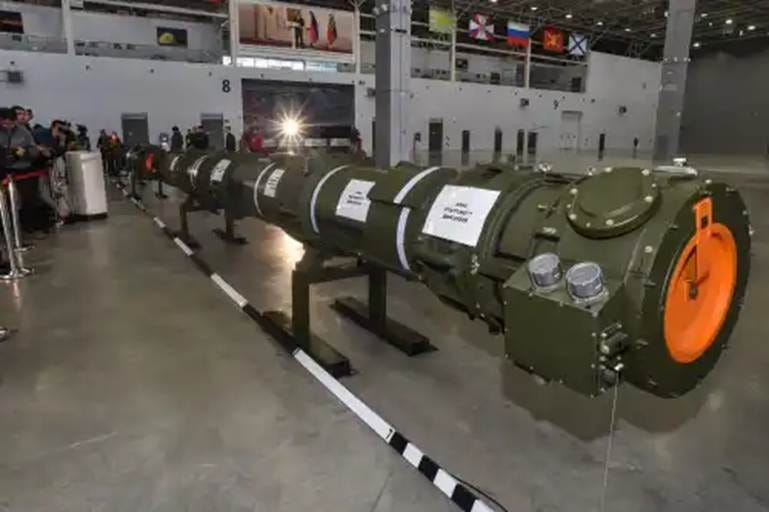
On January 23, 2019, Russia publicly displayed the 9M729 missile for the first time, side by side with the treaty compliant 9M728 Iskander-K cruise missile. Lt. Gen Mikhail Matveevsky, the chief of the Russian missile and artillery forces, declared that the 9M729 missile features a more powerful warhead and improved guidance system over the previous 9M728 model. The 9M729 did not, however, have an increased range.
The US and its NATO partners refused to attend the demonstrations and did not follow up on Russia’s offer of further technical investigations that would demonstrate that Russia was, in fact, not operating in violation of the INF treaty. The belief at the time was that the US did not want to legitimize a process which would prove Russia’s point but ignore the intelligence-based assessments that had been promulgated by the US intelligence community and supported by the US arms control community.
On August 2, 2019, the US withdrew from the INF treaty. Russia shortly followed suit.
Today, with the New START treaty’s legacy in doubt, those in the US arms control community who believe that an extension of the treaty’s core provisions, including the caps on deployed nuclear warheads, find themselves wrestling with the consequences of this precipitous decision on the part of President Trump. The reality is that the Trump administration empowered a certain influential segment of the US arms control community to undermine a critical foundational agreement because it had become inconvenient to those in the US military establishment who believed that the INF treaty placed unreasonable constraints on US military power by denying us access to an entire class of weapons which were being used by China as the cornerstone of their regional power projection capability.
The US case against Russia was manufactured from incomplete data which was scrutinized under the lens of a politicized intelligence community that had grown accustomed to providing the answers desired by policy makers, rather than providing the fact-based truth.
The US accused Russia of violating the “letter and intent” of the INF treaty, but could not detail the reasoning behind this conclusion, hiding behind the age-old “sources and methods” shield.
And yet, when given the opportunity to directly confront Russia with the reality of its lies by taking the Russian sup on their offer of a demonstration of the capabilities of the 9M729, the US declined, claiming that they had every expectation that the Russian missile would fly the distance necessary to prove it was, in fact, in compliance.
The US knew that Russia had flight tested the 9M729 to permitted ranges, and that it was this version of the missile that Russia had produced and fielded in 2016-2017.
The US knew that its case was founded in a deliberate misreading of flight test data related to the earlier development of the 3M14 cruise missile, a missile which, while sharing components with the 9M279, was not interchangeable with that system.
Today these empowered members of the arms control community—the very ones who presided over the untimely death of the INF treaty—are seeking to use that treaty’s demise as justification for rejecting arms control altogether.
According to their logic, not only can the Russians not be trusted, but neither can those in the arms control community who believe in the efficacy of arms control, if for not other reason than the remained in denial about the nefarious character of the Russian arms control community during the critical period of negotiations leading up to the signing and ratification of the New START treaty.
In the minds of those who promulgate the “Russia as cheater” mindset, the New START treaty should never have been allowed to go forward, given Russia’s demonstrated proclivity for cheating.
In their minds, the demise of the New START treaty is an act of delayed justice.
To the extent that the arms control process should be enabled to continue, these enablers of the “Russia cheated” behavioral model believe, it should only be as a facilitator of the deployment of new weapons systems along the lines of the policy pursued in the late 1970’s-early 1980’s to deploy the so-called “Euro missiles” (the ground launched cruise missile and the Pershing II intermediate range missile) into Europe in response to the Soviet deployment of SS-20 missiles.
But the notion that such a build-up could lead to a new “zero-zero” negotiation posture of the sort which allowed the INF treaty to be born is not part of the equation of these anti-arms controllers. Instead, they simply are advocating to produce newer classes of weapons.
This is the same approach they take regarding New START—eliminate the arms control agreement and use the resulting policy vacuum to promote the testing and fielding of entirely new classes of strategic nuclear delivery systems.
To create the conditions that favor a new nuclear arms race.
The saying that “the truth shall set you free” may not directly apply in this case, if for no other reason than the members of the US arms control community who promulgated the lie of Russian noncompliance know that they were promulgating lies.
Seeking to have the intelligence community correct the record with a retrospective re-examination of the pressures it was placed to produce a desired outcome is a mission impossible void of some sort of “Iraq moment” like the debacle that followed the ill-fated invasion and occupation of that nation under the manufactured guise of eliminating weapons of mass destruction.
But there is a path where truth becomes a tool of empowerment—public perception.

If the truth about Russia’s alleged INF treaty noncompliance can be told, if the record can be set straight in that regard, then public confidence in arms control, and in particular the efficacy of New START, giving the furtive efforts underway to extend critical elements of that agreement a new life, and furthering the possibility of a new follow-on treaty agreement being signed and ratified.
For this reason, I believe that the onus falls on Russia to set the record straight—not in the mistaken belief that it would somehow get the US arms control tiger to change its stripes, but rather to help shape American public perception so that there can be ground-up support for New START.
I am proposing that Russia make the history of the development of the 9M729 an open book. To reveal the development path taken regarding this missile’s journey from concept to operational weapons system. To discuss the flight tests that took place, and their results.
Russia could benefit by providing select members of the American media—perhaps including informed members of the independent alternative media such as myself, given my interest in and background on the subject—a detailed briefing about the 9M729 missile, to include a tour of a 9M729-equipped unit, to help demonstrate that the system was, in fact, a treaty compliant weapon under the INF Treaty.
Russia was willing to undertake activities of a similar nature in January 2019.
I believe there is a compelling case for such an effort today.
“Trust, but verify” used to be the mantra of the arms control community back when arms control treaties were in vogue.
Today’s arms control community appears to be operating under the mantra “Don’t rust, don’t verify.”
They want to kill arms control all together.
This would be to the collective detriment of both the US and Russia.
Let’s not wake up some morning in the future, confronted by the consequences of our collective failure to act.
As the United States seeks to improve relations with Russia, the issue of arms control will be one of several important topics that will need to be addressed. Before meaningful movement can be made toward the renewal of a New START-like treaty framework, it is critical that the American public be as well informed as possible about the factors that led the United States government to withdraw from the INF Treaty.
This is especially true if Russia was not in violation of the INF Treaty.